
How to stop sugar cravings naturally
- social Media
- Jun 17
- 5 min read

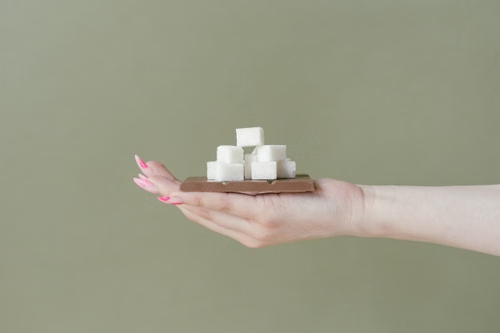
It's 3pm. You already ate lunch. You're not hungry.
Only, something in your brain is screaming for something sweet, and it is getting louder by the second.
Maybe you've tried cutting sugar before, and for a few days it actually goes fine. But then the crash hits harder than ever and you're right back at the snack drawer.
The thing is: once you understand what's actually triggering those cravings, you stop fighting a battle you can't win with sheer stubbornness and start working with your body instead.
Here's what we're covering:
Why your body keeps asking for sugar even when you don't want to eat it
The blood sugar connection most people never hear about
Natural ways to stop sugar cravings for real
What to look for if you want supplement support in Canada
When to expect it to actually get easier
Why your body keeps asking for sugar
When you eat something high in carbs or sugar, your blood sugar spikes. Your body releases insulin to bring it back down.
But sometimes insulin overshoots and your blood sugar drops too fast.
When that happens, your brain reads it as a fuel emergency and sends one signal: eat something sweet, now![1]
And then there's the second layer: Sugar triggers dopamine in your brain.[2] People describe the full cycle as "ravenous followed by brain fog"
What people try that doesn't actually fix it
Going cold turkey
Sometimes works for a few days.
Then the blood sugar crashes hit harder than ever because the body is adjusting.
Swapping to artificial sweeteners
Seems logical. Turns out it can make things worse.
Research suggests artificial sweeteners confuse the body's ability to predict how many calories a sweet food contains, which can throw off the signals that normally regulate appetite.[3]
Eating fruit every time a craving hits
Better than a cookie, and the fiber helps.
But if the blood sugar instability is still there, you're feeding the cycle rather than stopping it.
None of these approaches are dumb. They just don't go far enough upstream.
Takeaway: Most common fixes target the craving itself, not the blood sugar swing that caused it. That's why they work temporarily and then stop working.
Natural ways to actually stop sugar cravings
The goal here is fixing the root cause first, then supporting it with food and lifestyle.
Stabilize your blood sugar
If your blood sugar isn't spiking and crashing, your brain stops sending the emergency sweet signal.
The craving doesn't need willpower to resist. It just doesn't show up.
GlycoGuard
GlycoGuard is a blood sugar balancing supplement.
The logic is the same: when blood sugar stops swinging after meals, the brain stops triggering that eat-something-sweet alarm.
Customers say it helps them "feel more balanced throughout the day" and "less sluggish" -- which is exactly what stable blood sugar feels like from the inside.
Magnesium
Magnesium plays a direct role in how your cells respond to insulin and process glucose.
Most people don't get enough from diet alone. Low magnesium tends to make blood sugar regulation messier and more reactive, which feeds right back into the craving cycle.
Eat more of these at every meal
Protein at breakfast
People who skip it often set up an unstable blood sugar day before they even sit down to work. Protein slows glucose absorption and keeps you fuller longer.
Fat and fiber with every meal
Both slow the rate at which glucose enters your bloodstream. Less spike, less crash, less cravings.
Don't let more than four to five hours pass without eating
Long gaps between meals invite a glucose crash.
Predictable eating windows help keep blood sugar from bottoming out.
Address the stress-craving loop
Stress is one of the biggest drivers of sugar cravings.
When you're under pressure, your body releases cortisol.
Cortisol raises blood sugar by triggering glucose production in your liver and blocking your muscles from using it.[4]
And that blood sugar spike is followed by a crash.
This is why cravings get worse during hard weeks at work, not better.
Three things that break the stress-craving loop:
A short walk after eating
Lowers cortisol and blunts the post-meal glucose spike at the same time. Ten minutes is enough.
Enough sleep
Sleep deprivation cuts the appetite-suppressing hormone leptin while raising the hunger hormone ghrelin.[5]
In studies, even a few nights of poor sleep increased hunger for carbohydrate-dense foods significantly.
Not eating at your desk
Eating while stressed or distracted disrupts the signals your body uses to feel satisfied.
The environment matters more than people give it credit for.
Takeaway: Fixing sugar cravings means stabilizing blood sugar, adding the right nutrients, and managing stress.
The bottom line
The goal isn't to be someone who refuses sugar through gritted teeth.
It's to be someone who doesn't need it anymore, and works with their body.
And if you want to support your blood sugar directly, GlycoGuard is a good place to start.
It’s designed to help your body process glucose more evenly throughout the day.
You can learn more about it here.
FAQ
Why do I crave sugar specifically in the afternoon?
The afternoon craving is usually a delayed response to lunch.
Blood sugar spikes after eating, then drops about one to two hours later.
The timing feels like an afternoon slump, but it's often a post-meal blood sugar crash.
Is craving sugar a sign of something missing in my diet?
Sometimes. Magnesium deficiency is one of the more common nutritional links to blood sugar instability and cravings.
But in most cases, the craving is driven by the blood sugar spike-crash cycle, not a single nutrient gap.
Can stress really cause sugar cravings?
Yes, directly. Cortisol raises blood sugar, which then crashes, which triggers a craving.
If cravings get worse during high-stress periods, that's the stress-blood sugar-craving loop in action.
How do I know if GlycoGuard is right for me?
Nothing is guaranteed.
But if your cravings tend to show up after meals, in the afternoon, or during stressful stretches, and you want to support your blood sugar balance, it's worth trying.
You can learn more about GlycoGuard here.
What's the fastest thing I can do today to reduce cravings?
Eat a protein-forward breakfast, don't skip meals, and take a ten-minute walk after lunch.
These three habits alone tend to reduce the afternoon crash that drives most sugar cravings.
Disclaimer: This content is for general information purposes only and is not intended as a substitute for professional medical advice, diagnosis, or treatment. Always seek the advice of your physician or other qualified health provider with any questions you may have regarding a medical condition. Never disregard professional medical advice or delay in seeking it because of something you have read on this website.
References
1. Food cravings during acute hypoglycaemia in adults with Type 1 diabetes - PubMed/NCBI. Supports the claim that blood glucose drops trigger cravings specifically for carbohydrate-rich foods; cravings were reported by 65% of participants during hypoglycemia vs. 15% at normal glucose levels.
2. Evidence for sugar addiction: behavioral and neurochemical effects of intermittent excessive sugar intake - PubMed/NCBI. Supports the claim that sugar activates dopamine in the brain's reward centers, creating a craving-reinforcement loop similar to addictive substances.
3. Artificial sweeteners produce the counterintuitive effect of inducing metabolic derangements - PMC/NCBI. Supports the claim that artificial sweeteners disrupt the body's learned metabolic signaling and are associated with increased metabolic dysfunction rather than fixing blood sugar instability.
4. Stress hyperglycemia: an essential survival response - PMC/NCBI. Supports the claim that cortisol raises blood glucose by activating liver gluconeogenesis and blocking glucose uptake in muscle tissue.
5. Sleep curtailment associated with decreased leptin, elevated ghrelin, and increased hunger - PubMed/NCBI. Supports the claim that poor sleep raises hunger hormones; sleep restriction lowered leptin by 18% and raised ghrelin by 28%, increasing appetite particularly for carbohydrate-dense foods.


Comments